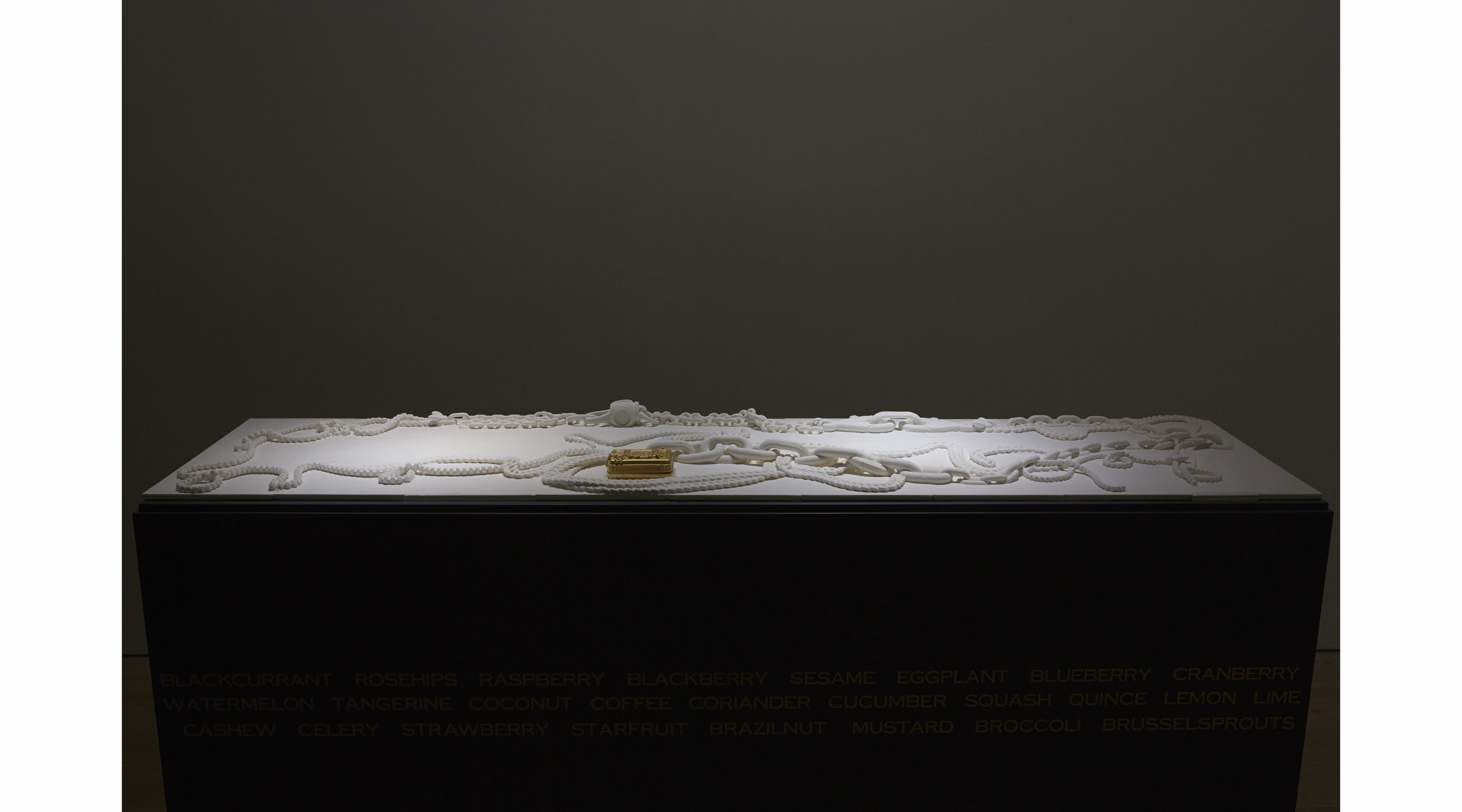
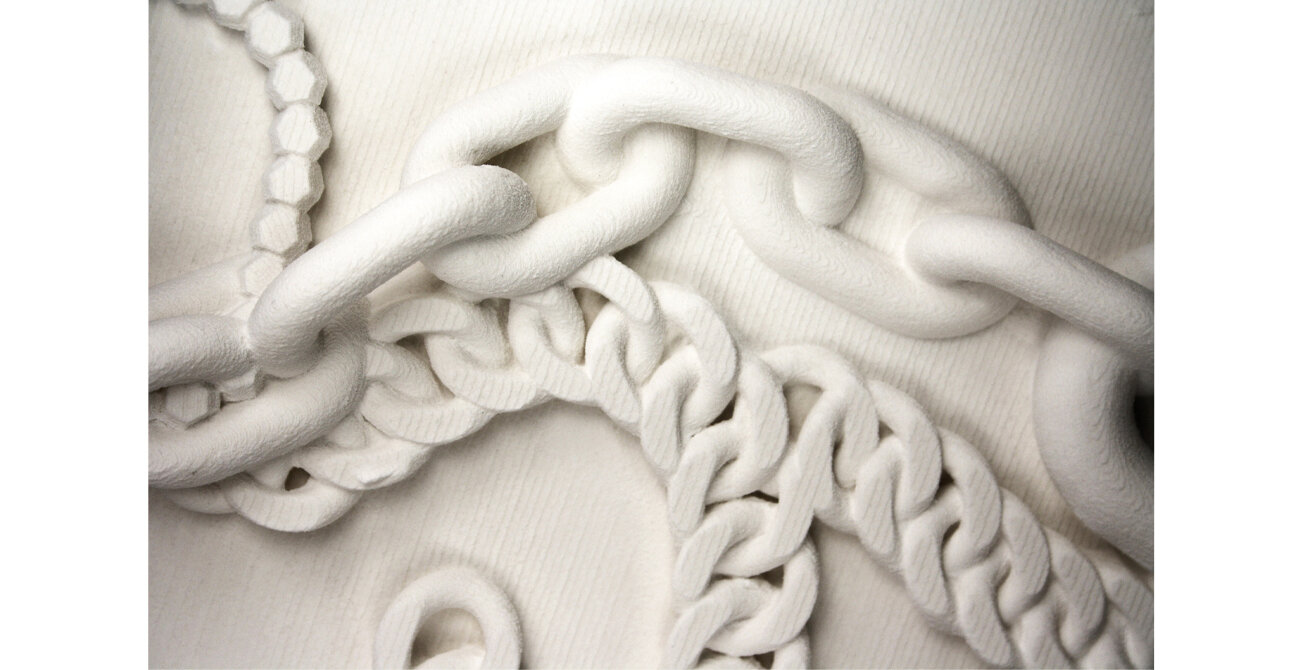
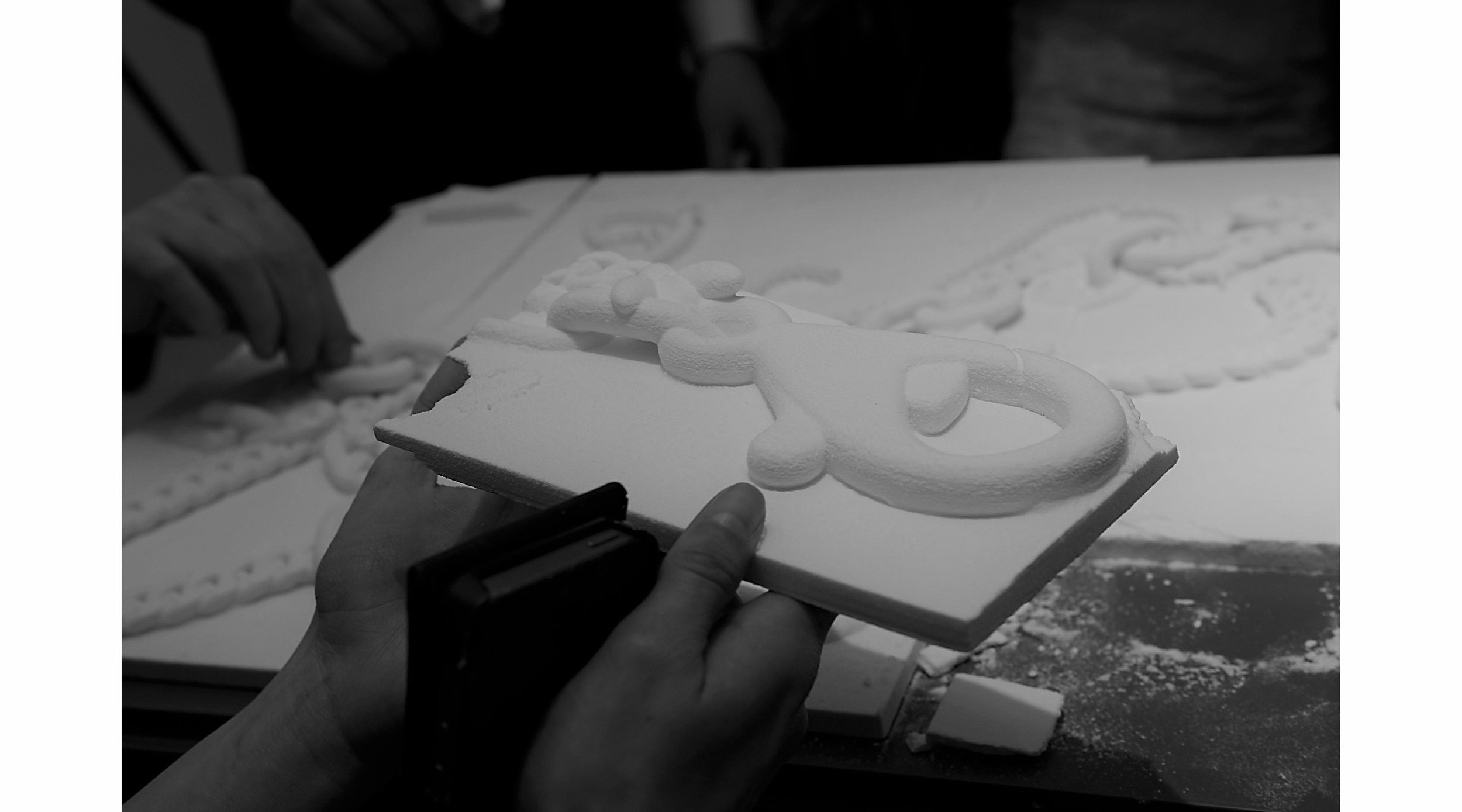
For Collect Open 2015, I created a site-specific jewellery installation, made from honey. Working for the first time with dehydrated honey in a 3D printer, an edible sculpture was designed and executed in collaboration with Julian Sing, a food scientist and 3D printing expert based in the Netherlands.
The Future of Apis Melifera critically views upon the impact of human capitalistic activity in conjunction with honeybee extinction. It draws attention to the alarming Colony Collapse Disorder, which is thought to be caused by chemical toxins in the environment, chemical use in the bees colonies and as a result of their enslavement in industrial mono cultures. Raising awareness of how much honeybees play a key role in our agriculture, my designs were inspired by using the metaphor of a food chain as well as traditional jewellery chain patterns and ornaments.
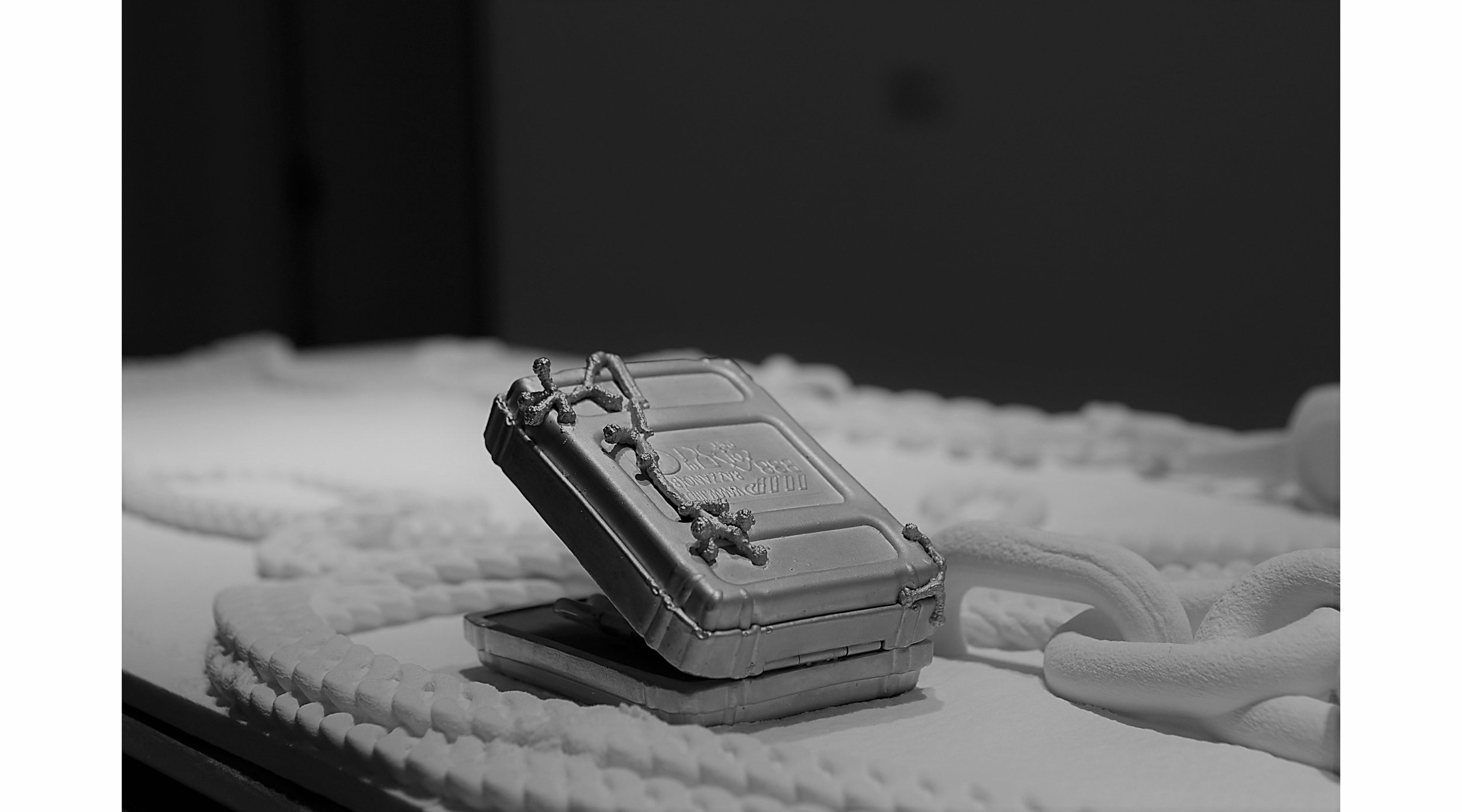
Comprising of three parts, the installation revealed the edible, relief-like sculpture on top of a plinth which conjured notions of a tombstone with its epitaph gold lettering naming all produce that bees pollinate. From the rightful awareness of the tragic structure of every life and our longing to holding on, a precious metal box shaped from a fruit punnet was shown, containing small vials of rare honey samples from around the world - echoing melancholy, to be kept as a future vertu when bees no longer exist. The works objective was to communicate that honey is not merely honey, but ‘pollination’ that is responsible for more than half of our food supplies.
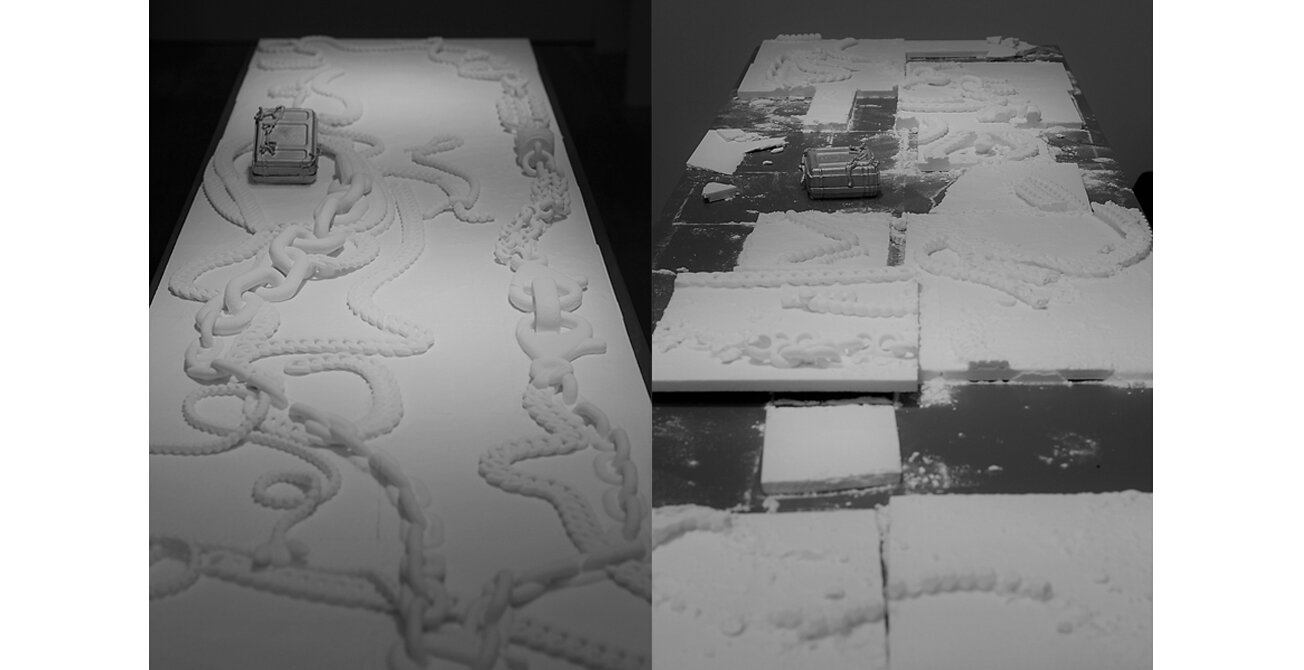
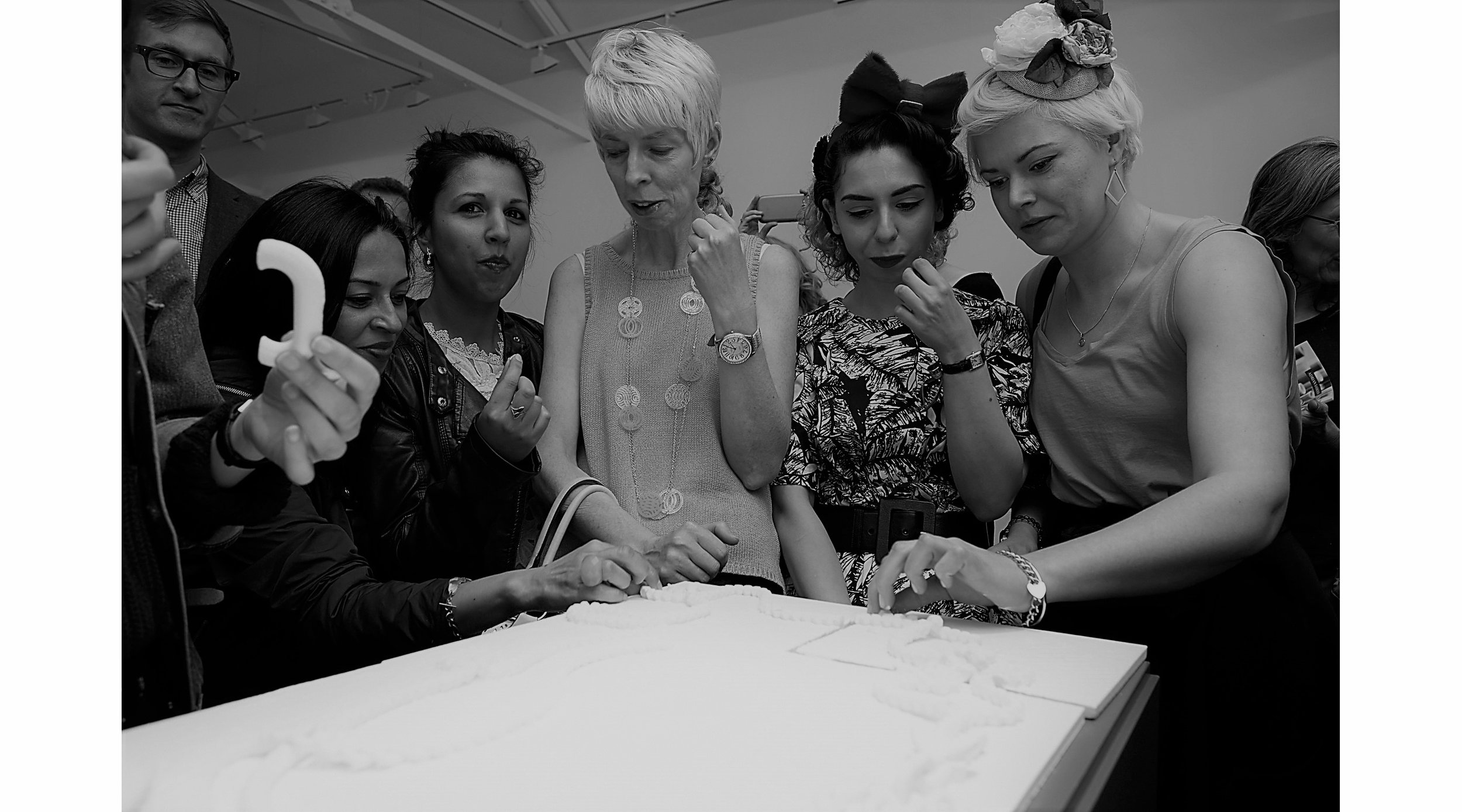
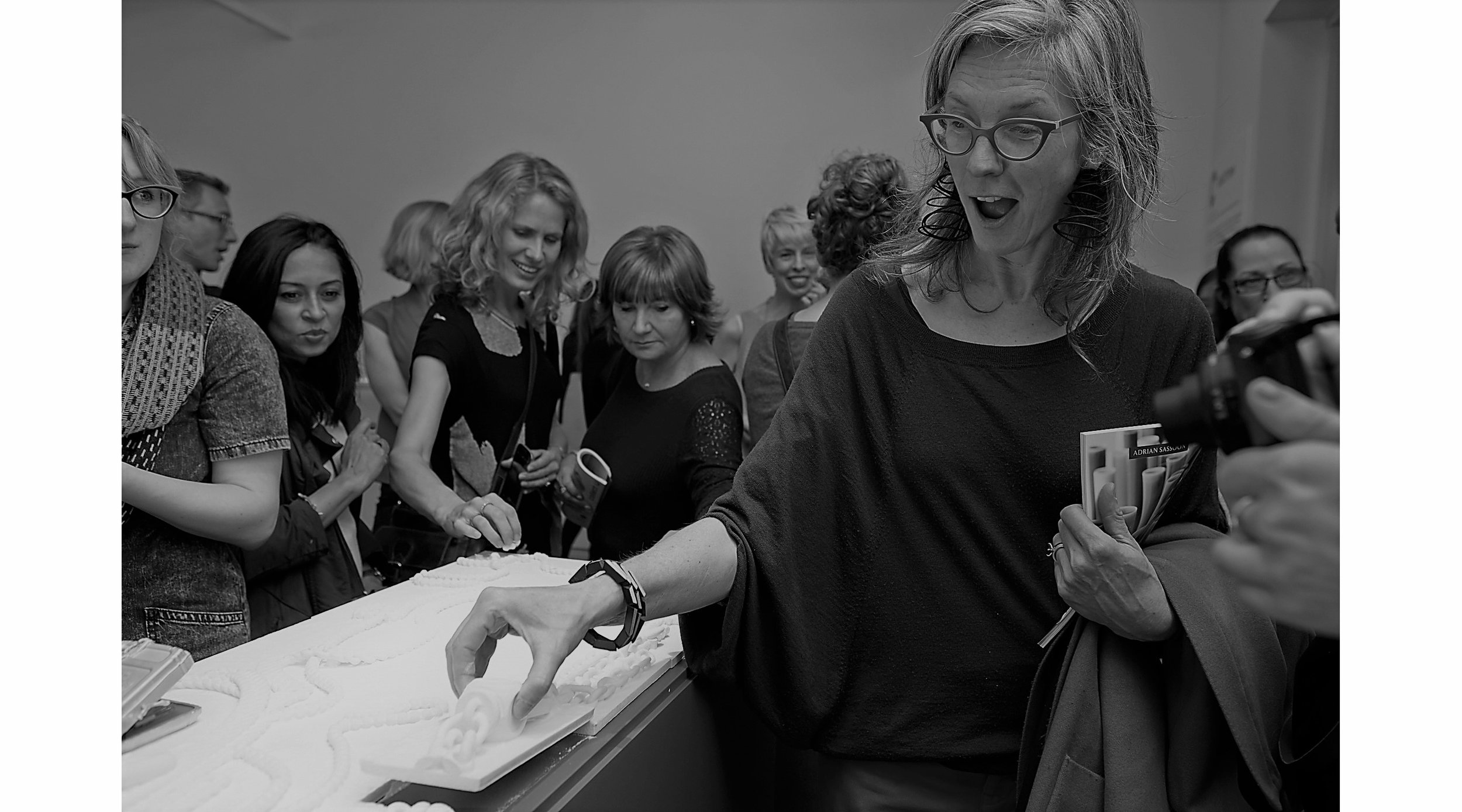
For the duration of the fair, the installation remained under a glass cover, however on the last day, the audience was invited to interact with, experience, dismantle and taste the honey sculpture.